Screen Dimensions and Their Role in Shaping Immersion Across Mobile Slot Reels and Live Dealer Card Tables
Rosa Schmid · Sep 11, 2026
Screen Dimensions and Their Role in Shaping Immersion Across Mobile Slot Reels and Live Dealer Card Tables
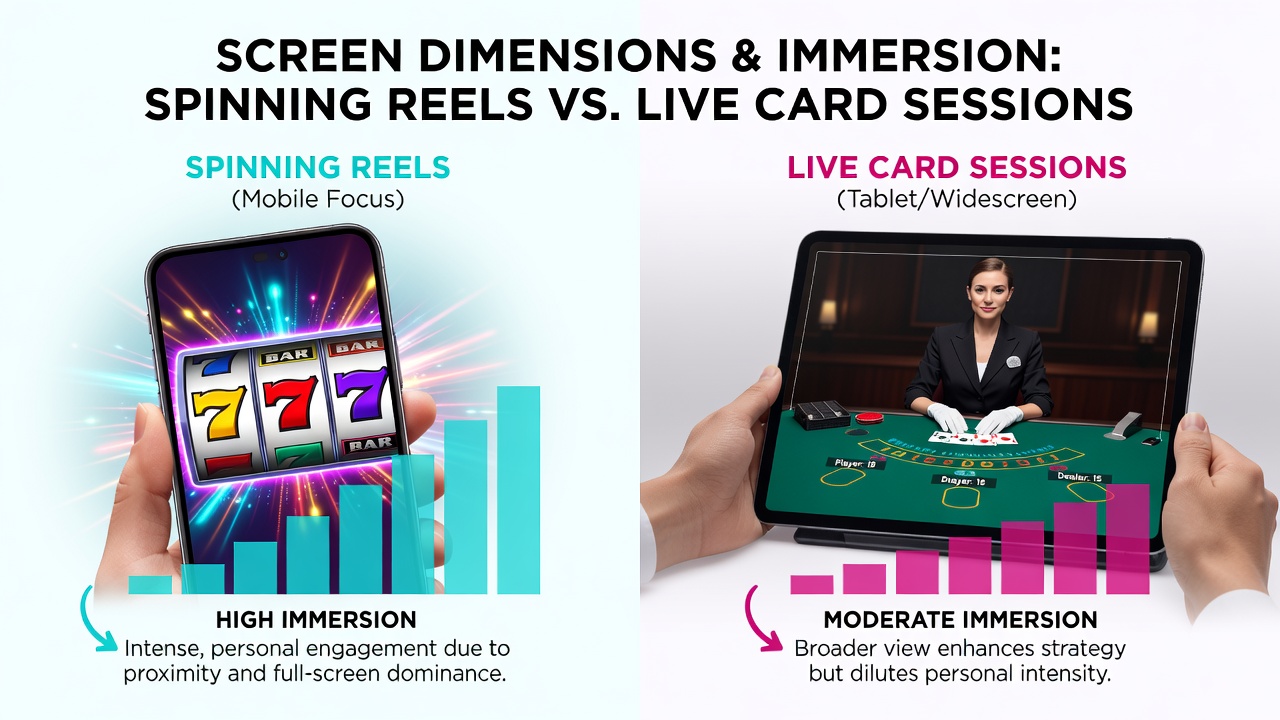
Digital casino applications continue to evolve as screen sizes on handheld devices range from compact 5-inch displays to larger tablets exceeding 10 inches, and researchers track how these variations alter player engagement with spinning reels compared to live card sessions. Data from app analytics platforms indicate that smaller screens often compress reel animations and symbol details in slot games, which can reduce visual depth while players still report sustained focus during short sessions because core mechanics remain visible without excessive scrolling.
Reel Visibility and Spatial Awareness on Varied Displays
Spinning reel titles rely on rapid visual cues and pattern recognition, so screen width directly influences how many symbols appear simultaneously and how fluid bonus round transitions feel. Studies conducted on user interaction logs reveal that devices with screens under 6 inches tend to crop peripheral reel elements during landscape mode, forcing players to adjust viewing angles more frequently, whereas larger panels allow full symbol sets to register without interruption and support smoother autoplay sequences. Observers note that portrait orientation on mid-range phones preserves vertical reel stacks effectively, yet it limits side-by-side comparison of paylines that wider tablets accommodate naturally.
Industry reports compiled through September 2026 highlight incremental updates in rendering engines that adapt reel scaling based on pixel density, and these adjustments correlate with extended session durations on mid-sized screens where symbol clarity improves without requiring zoom gestures. Those tracking retention metrics across operating systems find that reel immersion metrics rise steadily once screen diagonals exceed 6.5 inches because motion blur effects and particle animations render at higher fidelity.
Live Dealer Card Environments and Multi-Element Screen Demands
Live card sessions introduce additional layers including dealer video feeds, community chat overlays, and real-time card reveals, all of which compete for screen real estate on mobile devices. Research indicates that smaller displays often stack these components vertically, which can fragment attention between the table surface and player controls, whereas tablets consolidate video windows alongside betting interfaces without forcing constant refocusing. Figures from app usage databases show that live dealer immersion scores improve when screens permit simultaneous visibility of multiple players at the table, a configuration more common on devices above 8 inches.
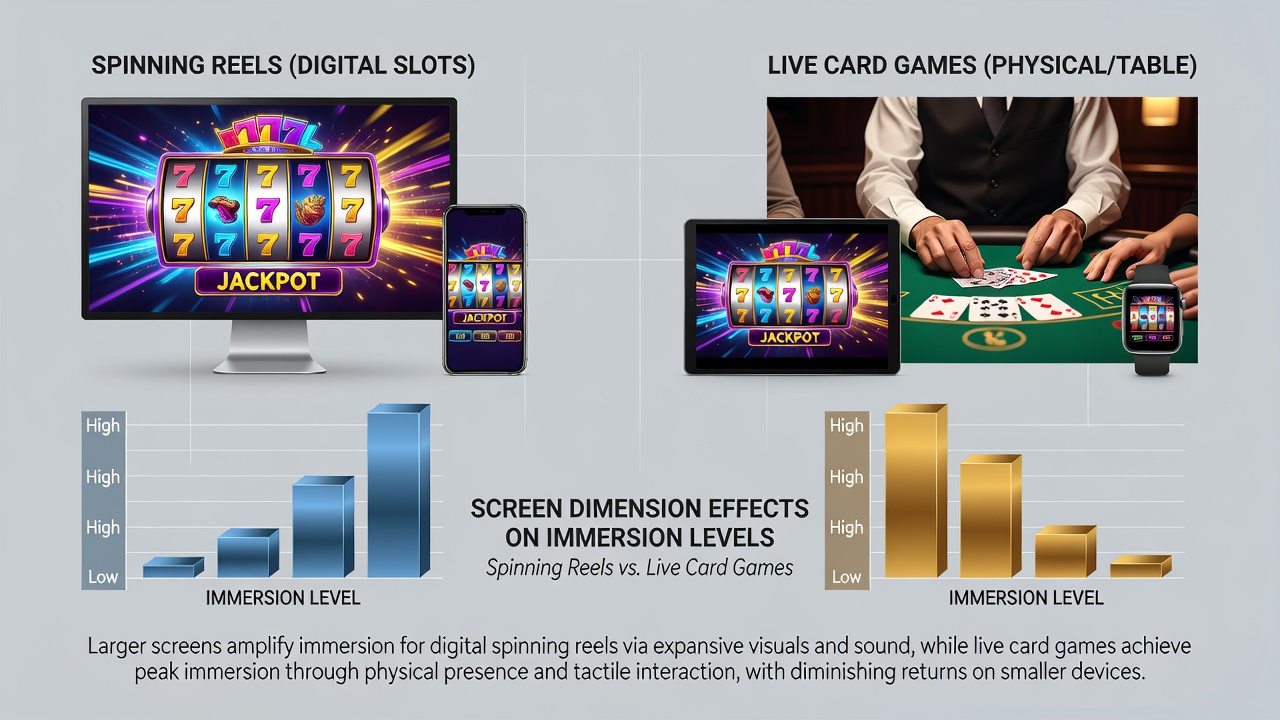
Because live streams require stable frame rates and clear facial expressions from hosts, pixel density plays a larger role than raw diagonal measurement, and users on high-resolution compact phones sometimes maintain comparable engagement levels to tablet users when network conditions support uninterrupted feeds. Data collected through regional gaming authorities outside the UK demonstrate that session completion rates for live card games stabilize once screen sizes allow chat windows to remain docked without obscuring the main action area.
Comparative Patterns Across Game Categories
Side-by-side evaluations of spinning reels versus live card play reveal distinct immersion thresholds tied to screen dimensions. Reel-based games maintain core engagement even on smaller panels because repetitive mechanics and sound cues compensate for reduced visual scope, while live sessions exhibit sharper drops in perceived presence when video quality or interface crowding occurs. Academic examinations of eye-tracking data confirm that players allocate attention differently: reel sessions emphasize central symbol zones regardless of size, whereas live card participants shift gaze more often between dealer feed and personal cards on constrained displays.
Reports issued in September 2026 by international gaming research consortia document these divergences through aggregated telemetry from multiple app providers, showing that live dealer titles benefit disproportionately from larger screens during peak evening hours when chat activity increases. In contrast, reel immersion holds steadier across size categories because autoplay and quick-spin functions reduce reliance on peripheral details. What's interesting is how hybrid users who alternate between both formats demonstrate higher overall retention when their primary device supports at least 6.7 inches, allowing seamless switching without reorientation delays.
Technical Factors and Platform Adaptations
App developers incorporate responsive design techniques that detect device dimensions and adjust element hierarchies accordingly, yet hardware limitations persist across budget models popular in emerging markets. Evidence from performance benchmarks indicates that refresh rates above 90Hz enhance reel spin smoothness on mid-sized phones, while live card streams gain more from consistent color accuracy than from sheer size. Regulatory filings in North American and Australian jurisdictions track these adaptations through compliance reports that note minimal variation in reported player satisfaction once minimum resolution thresholds are met.
Because battery consumption rises with sustained video streams in live dealer environments, screen dimension interacts with power management features that dim backgrounds on smaller devices, indirectly affecting immersion by altering contrast levels during extended play. Observers tracking September 2026 software patches observe incremental gains in adaptive scaling that narrow the immersion gap between phone and tablet users for both game types.
Conclusion
Screen dimension effects manifest differently across spinning reels and live card sessions because each format prioritizes distinct sensory inputs, and ongoing telemetry from digital platforms continues to map these relationships as device hardware advances. Data accumulated through 2026 underscores the value of platform-level optimizations that account for varied display sizes without assuming uniform preferences among users. Those monitoring engagement trends anticipate further refinements as foldable and larger-format mobiles enter wider circulation.